The Kiln & The Fire
Follow the journey of raw clay as it transforms into functional art through traditional Finnish ceramic techniques.

Wedging
The process begins with wedging the clay, a rhythmic kneading motion that removes air bubbles and ensures uniform consistency. This ancient technique prepares the clay for throwing, creating a smooth, workable material ready for the wheel.

Throwing
On the potter's wheel, the clay takes shape through skilled hands. Each rotation brings form to function, as the vessel emerges from the spinning clay. This stage requires patience and precision, balancing speed with control.
Trimming
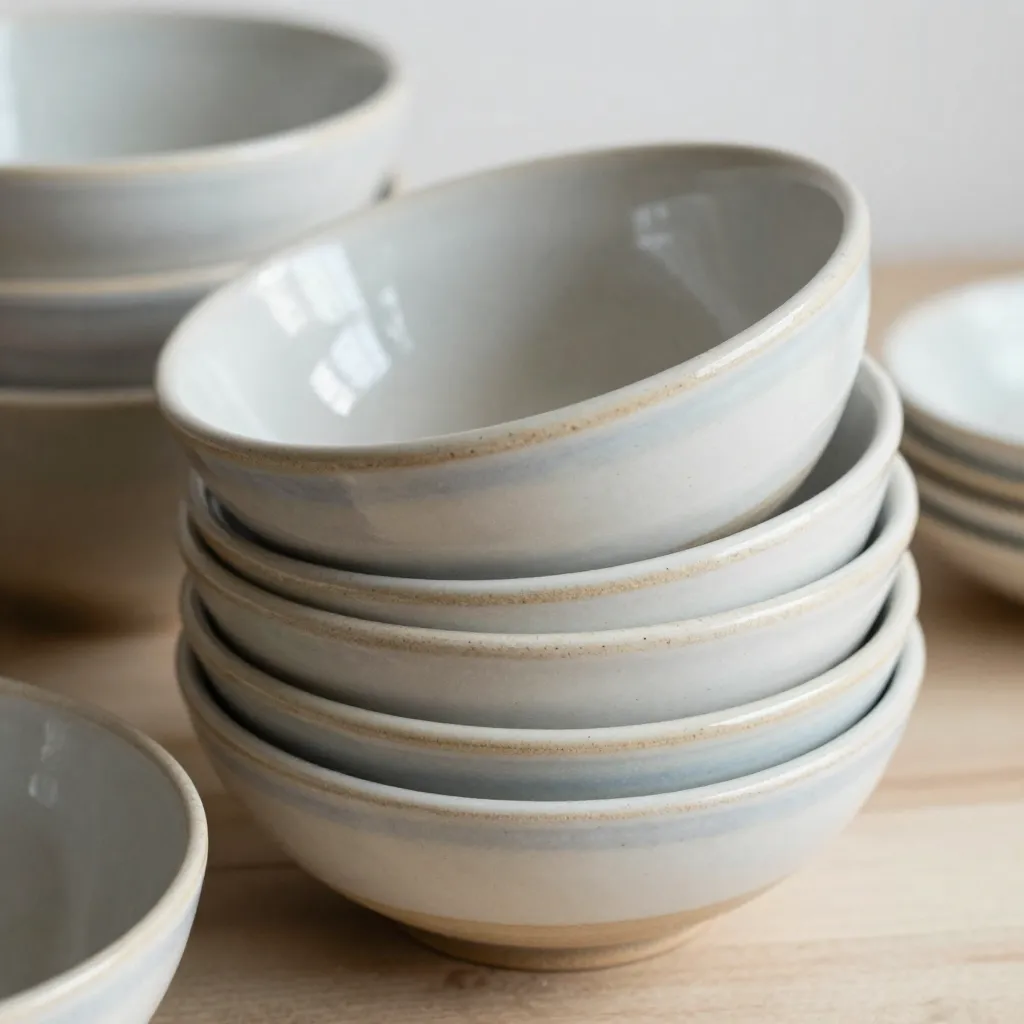
Once the piece has dried to leather-hard consistency, excess clay is carefully removed. This trimming process refines the foot and creates clean lines, revealing the final form hidden within the raw material.

First Firing
The bisque firing occurs at approximately 1000°C (1832°F), transforming the fragile clay into durable ceramic. This initial firing removes all remaining moisture and prepares the surface for glazing.
The kiln's heat works its magic, creating permanent bonds between clay particles.
Technical Details
Kiln Temperature
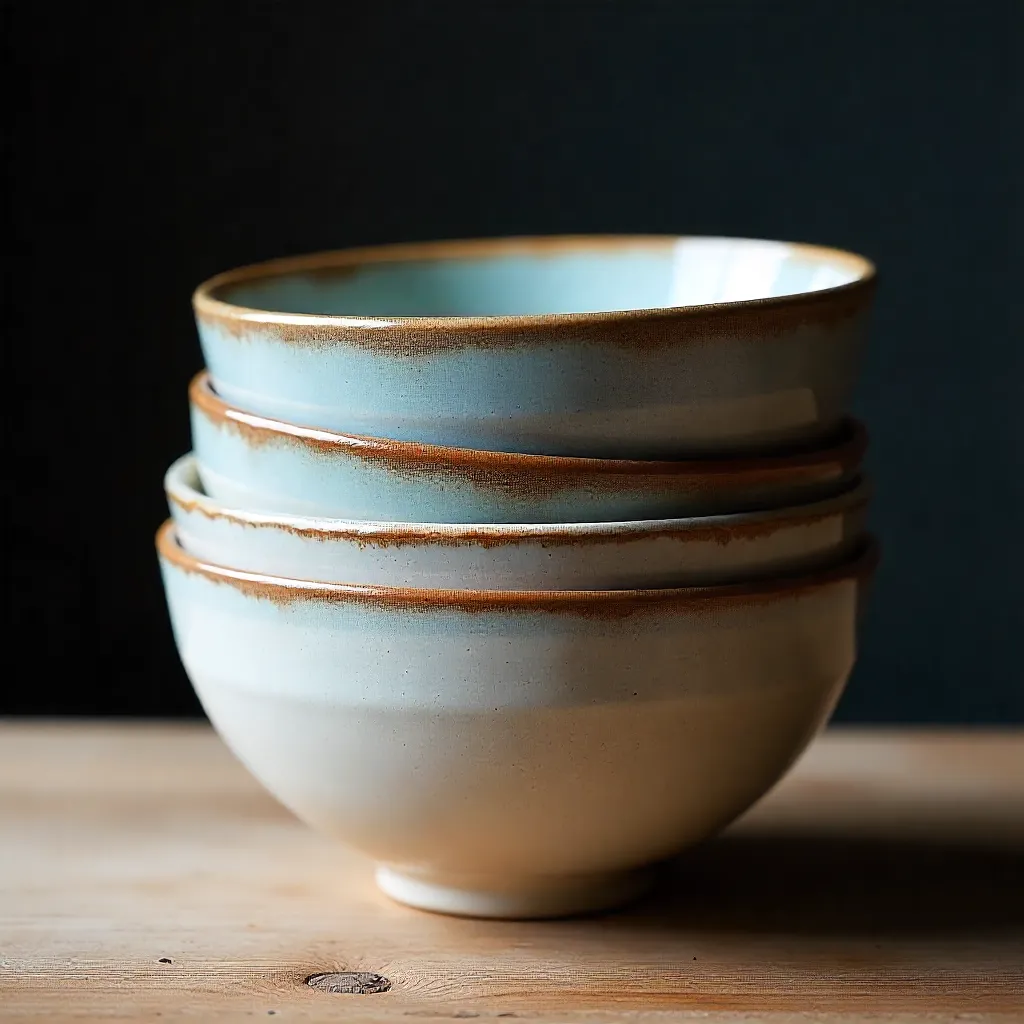
Our stoneware pieces are fired to cone 6 (approximately 1222°C or 2232°F), creating fully vitrified ceramics that are non-porous and dishwasher-safe.

Glaze Composition
All glazes are formulated using non-toxic materials, primarily silica, feldspar, and natural colorants. Iron oxide creates earthy tones, while copper produces subtle green variations.
Firing Duration
A complete firing cycle takes approximately 12-14 hours, including heating, soaking at peak temperature, and controlled cooling. This slow process ensures even heat distribution and prevents cracking.